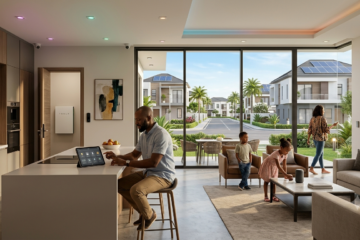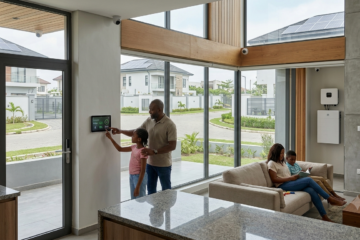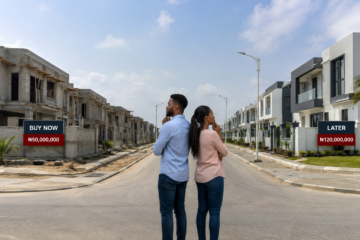
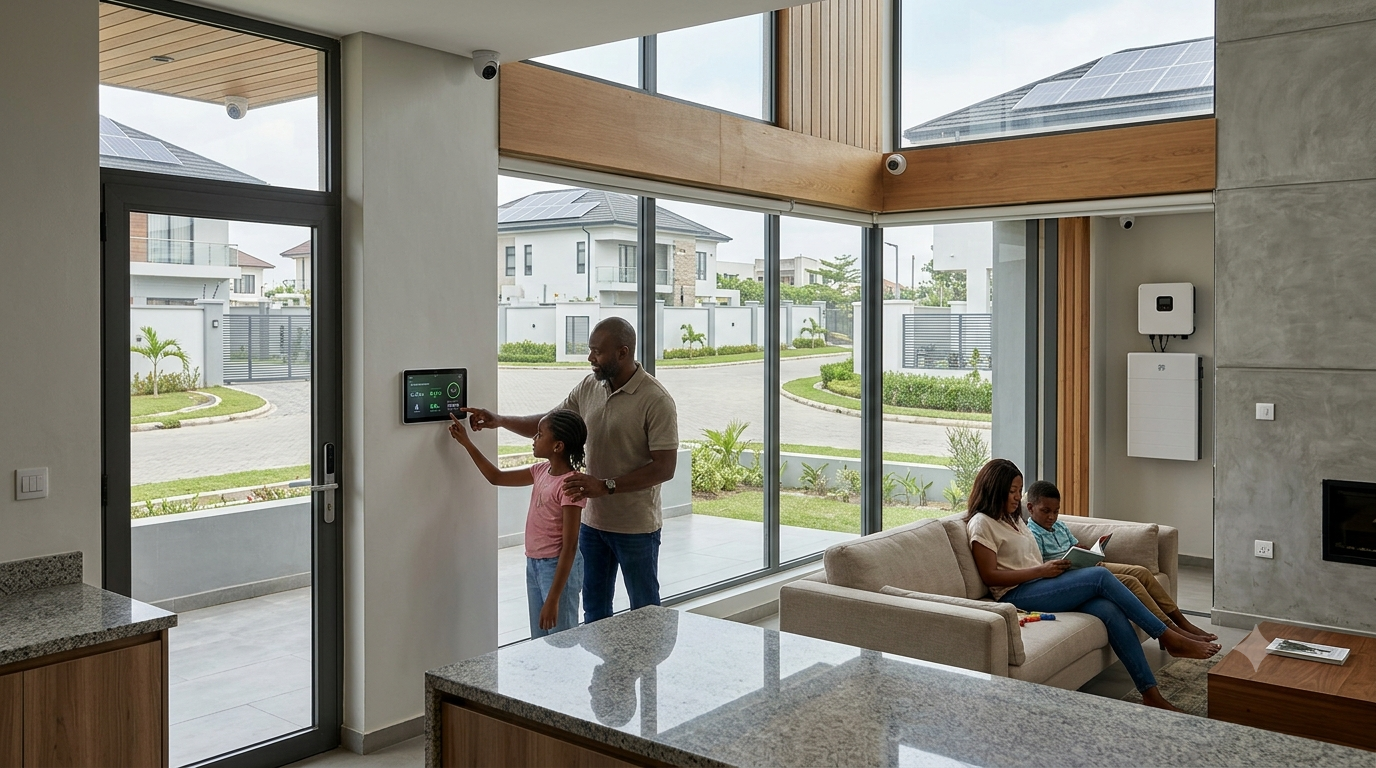
For many Nigerians, the idea of a smart home is not about asking a voice assistant to turn on the lights. It’s about having power when you need it. It’s about knowing what is happening around your property when you are away. It’s about reducing dependence on fuel, improving security, and making a home more convenient to live in. That is why smart home technology is becoming increasingly relevant to the Nigerian real estate market.
The conversation is moving beyond luxury gadgets. Solar power systems, CCTV cameras, smart locks, automated lighting, energy monitoring, and other connected systems are becoming practical features that can improve the way a home functions. For buyers considering a new home, these features are becoming part of a bigger question: what does the property actually offer beyond the walls and finishing?
What Is a Smart Home?
A smart home is a property where certain systems and devices can be monitored, automated, or controlled through technology. This could include:
- Security cameras that can be monitored remotely
- Smart locks and controlled access systems
- Automated lighting
- Solar power and battery storage systems
- Energy monitoring
- Smart appliances
- Automated gates
- Internet-connected home systems
The important point is that a smart home does not have to be filled with expensive gadgets. A home can be considered smart simply because technology is being used to solve everyday problems more efficiently. In Nigeria, the most useful smart home features are likely to be the ones that address real concerns, particularly electricity, security, and convenience.
Solar Power Is Becoming a Major Part of Modern Housing
Electricity remains one of the biggest factors affecting the way Nigerians live and operate their homes. The Nigerian Electricity Regulatory Commission explains that electricity tariffs vary depending on the location and the level of electricity supply available. The regulator also provides monthly energy cap information for different distribution companies. At the same time, the cost and inconvenience associated with alternative power sources have made energy independence increasingly important for property owners.
This is where solar power comes in. A modern residential property may use solar panels, batteries, and an inverter system to provide electricity for selected appliances and essential systems.
The size of the system matters. A small solar system may power lights, fans, televisions, internet equipment, and other essential devices. A larger system can support more demanding appliances, depending on the capacity of the panels, inverter, and battery storage.
This is why buyers should not simply ask, “Does the property have solar?” They should ask:
- What is the capacity of the solar system?
- What appliances can it power?
- How much battery storage is available?
- Is the system designed as a backup or a primary power source?
- What happens during extended periods of rain or low sunlight?
- How much will maintenance and battery replacement cost?
The word “solar” alone does not tell you enough. The actual system specification is what matters.
Solar Power and Smart Homes Work Better Together
Solar power becomes even more useful when combined with energy monitoring. A smart energy system can help homeowners understand how electricity is being consumed. This can make it easier to identify appliances that use the most power and manage consumption more efficiently.
For example, a homeowner may discover that a particular appliance is consuming far more energy than expected. With better monitoring, the household can adjust usage and make better decisions about where available power should go.
This is particularly important in homes with solar and battery systems because energy management affects how long stored power lasts. A properly designed system is not just about installing solar panels on the roof. It is about designing the energy system around the actual needs of the household.
Security Is One of the Strongest Reasons to Consider Smart Home Technology
Security has always been an important factor in Nigerian real estate. Modern technology is now changing how homeowners monitor and protect their properties.
CCTV cameras can provide visibility around a property. Some systems allow homeowners to view live footage remotely. Other systems can send alerts when movement is detected. Smart locks and controlled access systems can also reduce reliance on traditional keys.
For example, access may be managed using codes, cards, biometrics, or mobile applications, depending on the system installed.
But technology does not replace proper security. A smart camera is not a substitute for good estate planning, perimeter security, proper lighting, and responsible security personnel.
The strongest approach combines technology with physical security measures. This is why features such as gated communities, perimeter fencing, street lighting, surveillance cameras, and security personnel continue to matter.
Smart Home Technology Can Improve Everyday Convenience
The best technology is often the technology that quietly makes daily life easier. Automated lighting can reduce the need to manually switch lights on and off. Smart controls can allow homeowners to manage certain systems remotely.
Automated gates can make entry and exit more convenient. Smart appliances can help homeowners monitor and manage their use of electricity. These features may appear small individually, but together they can change how a property feels to live in.
For people who travel frequently, remote monitoring can also be useful. A homeowner may be able to check security cameras, monitor certain systems, or receive alerts while away from the property. That convenience becomes even more valuable for people who own homes in cities where they do not live permanently.
The Nigerian Smart Home Market Is Still Developing
Smart home adoption in Nigeria is still developing, but the direction is clear. The technology is becoming more visible in new residential developments, especially in major urban centres. A 2025 overview of smart home technology in Nigeria identified security systems, automation, energy efficiency, and connected devices as major areas of development in the sector.
At the same time, Nigeria’s energy situation is creating a strong practical reason for homeowners and developers to explore renewable energy. The World Bank’s 2026 Country Climate and Development Report for Nigeria highlights the importance of low-emission technologies, climate resilience, infrastructure, and sustainable development in the country’s future growth.
This does not mean every Nigerian home needs to become a fully automated technology showroom. It means developers and buyers are beginning to think differently about what a modern home should provide.
A Smart Home Is Not Automatically a Better Home
This is an important point. A property does not become better simply because it has a long list of smart devices.
Technology can become a problem when it is poorly installed, difficult to maintain, or dependent on systems that are no longer supported. A buyer should consider:
- Who installed the system?
- Is the equipment from a reliable manufacturer?
- Can replacement parts be sourced locally?
- Does the system require a monthly subscription?
- What happens if the internet connection goes down?
- Can the system still function manually?
- Is there a reliable maintenance plan?
A simple system that works reliably is often better than an expensive system that is difficult to operate. The goal should be useful technology, not technology for the sake of appearance.
What Should Buyers Look For in a Smart Home?
Before buying a property advertised as a smart home, buyers should look beyond the marketing language.
Ask for specific information about the systems included.
For solar power, request the capacity of the inverter, battery, and panels.
For security, ask about the number and location of cameras, recording capability, and monitoring arrangements.
For smart locks and access systems, understand how they operate and what happens during a power or internet outage.
For energy efficiency, look at the design of the property itself.
Good ventilation, natural lighting, energy-efficient appliances, quality insulation, and thoughtful building design can reduce energy demand before technology is even added.
A truly modern home should combine good design with useful technology.
Developers Are Beginning to Think Beyond Finishing
For years, conversations around property value have focused heavily on location, size, finishing, and title documentation.
These factors remain important.
However, the expectations of homebuyers are changing.
A buyer may now compare two similar properties based on the quality of their power systems, security infrastructure, internet connectivity, and automation features.
This creates an opportunity for developers.
A property designed with proper conduits for future technology, solar-ready infrastructure, security systems, and energy-efficient features can remain more adaptable as technology changes.
The smartest developers will not necessarily be the ones installing the most gadgets.
They will be the ones understanding which features genuinely improve the lives of the people who will live in their properties.
What Does the Future of Nigerian Housing Look Like?
The future is unlikely to be one where every home is controlled entirely by artificial intelligence. The more realistic future is simpler.
Homes will gradually become more efficient, more connected, and more responsive to the needs of their residents. Solar power will continue to become more important. Security systems will become more connected. Energy management will become more useful.
Homeowners will have more control over their properties, even when they are away. For the Nigerian property market, this could change how homes are designed, marketed, and valued. The modern home of the future may not be defined by the number of gadgets inside it. It may be defined by how well the home solves the problems that people face every day.
Final Thoughts
Smart homes in Nigeria are moving from an idea associated with luxury to a more practical conversation about how people want to live. Solar power can help address energy challenges. Smart security can improve visibility and control.
Energy monitoring can help households understand consumption. Automation can make everyday living more convenient. But the technology must be useful, reliable, and properly designed for the realities of Nigerian homes. For anyone buying or building a home today, it is worth looking beyond the finishing and asking a broader question:
How well is this property designed for the way people will live in the future?
The answer may increasingly involve solar power, connected security, energy efficiency, and smart technology. That is where the future of home living in Nigeria is heading.